Bedroom Privacy Window Film: Day and Night Privacy Guide
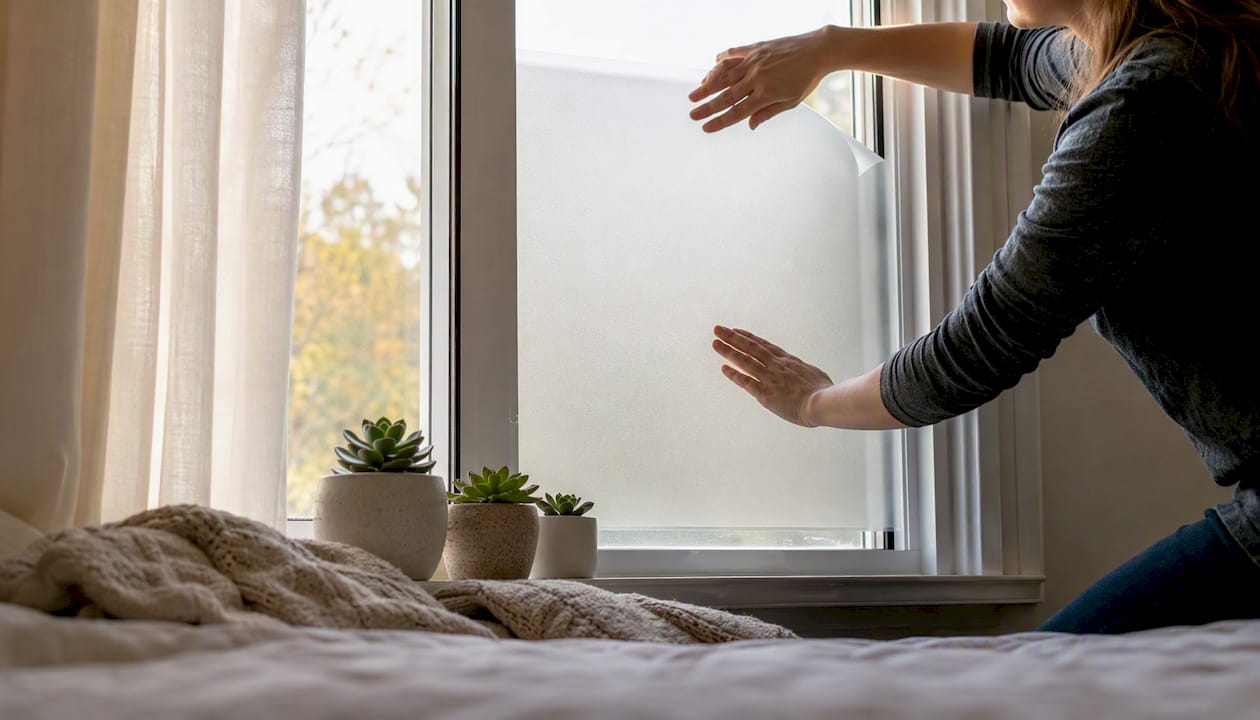
For most bedrooms, a frosted or matte static-cling film is the smartest starting point. It scatters light so nobody can see in, but your room still feels bright and open, not like a cave. If you’re on the ground floor, street-facing, or dealing with nosy neighbors after dark, a reflective or one-way film won’t cut it once your lamps click on. Here’s what actually matters before you buy:
- Daylight allowed: frosted films keep soft, diffuse light; blackout films cut it almost entirely.
- Night performance: only opaque or frosted films hold privacy after sunset; mirrored films flip and expose your room.
- Installation: static-cling is a weekend DIY job; adhesive and specialty films usually call for a pro.
For double-pane windows, oddly shaped glass, or a finish you want to last years instead of months, professional installation is worth the extra cost. Order a sample swatch first and hold it up at night before you commit.
Key Takeaways
Frosted or opaque static-cling film delivers reliable day-and-night bedroom privacy, while reflective film only protects you until the lights go on inside.
| Point | Details |
|---|---|
| Choose frosted for 24-hour privacy | Frosted and blackout films hold privacy day and night; reflective films fail once interior lights turn on. |
| Test before you commit | Order a swatch and check it against your window in both daylight and lamp-lit conditions. |
| Match installation to the window | Static-cling suits simple DIY jobs; double-pane or large glass calls for a professional installer. |
| Check the full spec sheet | Compare VLT, UV-block percentage, and thermal performance, not just the privacy claim. |
| Professional installation extends film life | Tint Advantage installs commercial-grade film with warranty coverage and reports client cooling savings of roughly 10 to 20 percent. |
Table of Contents
- Types Of Bedroom Privacy Window Film And Where Each One Fits
- Why Do Some Window Films Stop Working At Night?
- How To Choose The Right Privacy Film For Your Bedroom
- Installation Options, Timelines, and What Bedroom Film Costs
- Practical Tips To Keep Your Bedroom Private After Dark
- UV Protection, Energy Savings, and Safety Benefits Worth Knowing
- Why Professional Installation Still Wins For Bedroom Windows
- Keeping Bedroom Privacy Film Looking Good For Years
- Sources
Types Of Bedroom Privacy Window Film And Where Each One Fits
Not every “privacy film” behaves the same way once the sun goes down, and picking the wrong type is the single most common regret homeowners run into.
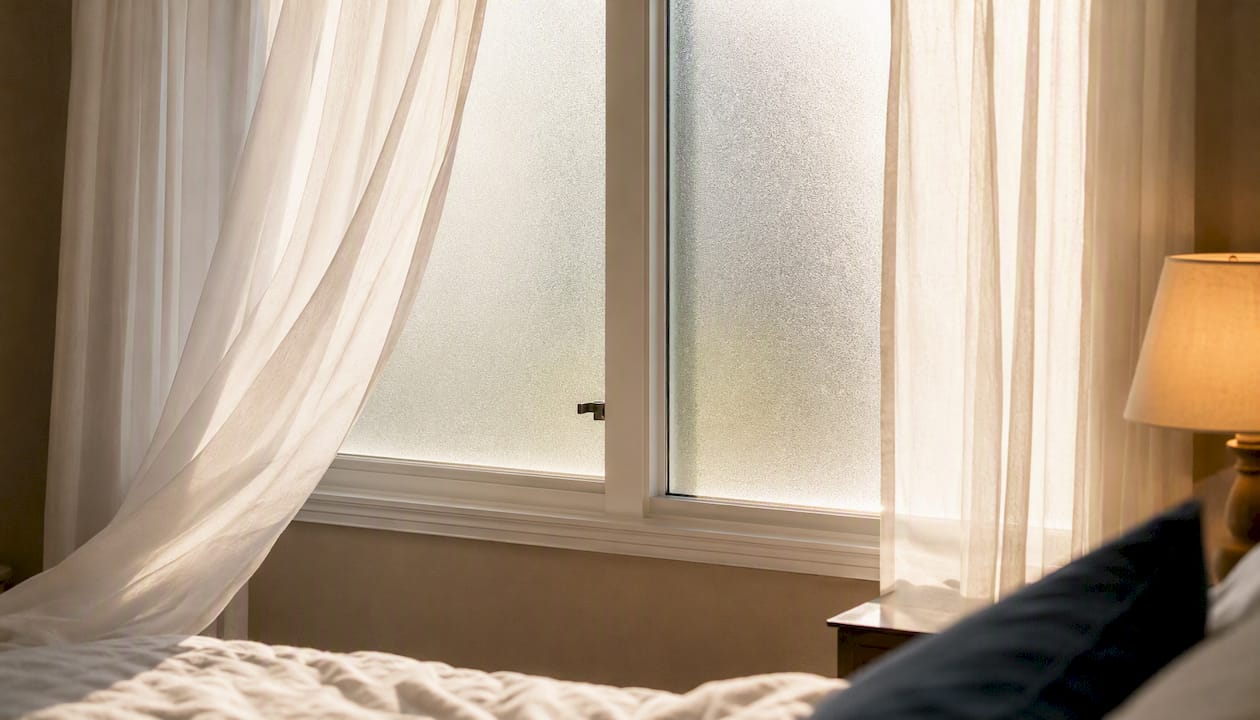
Frosted or etched film is the workhorse. It mimics sandblasted glass, diffusing light instead of blocking it, and it holds privacy day and night because it obscures shapes regardless of which side has more light. Consumer versions like the KESPEN frosted static cling claim around 96% opacity, which is high enough that most bedrooms won’t need anything stronger.
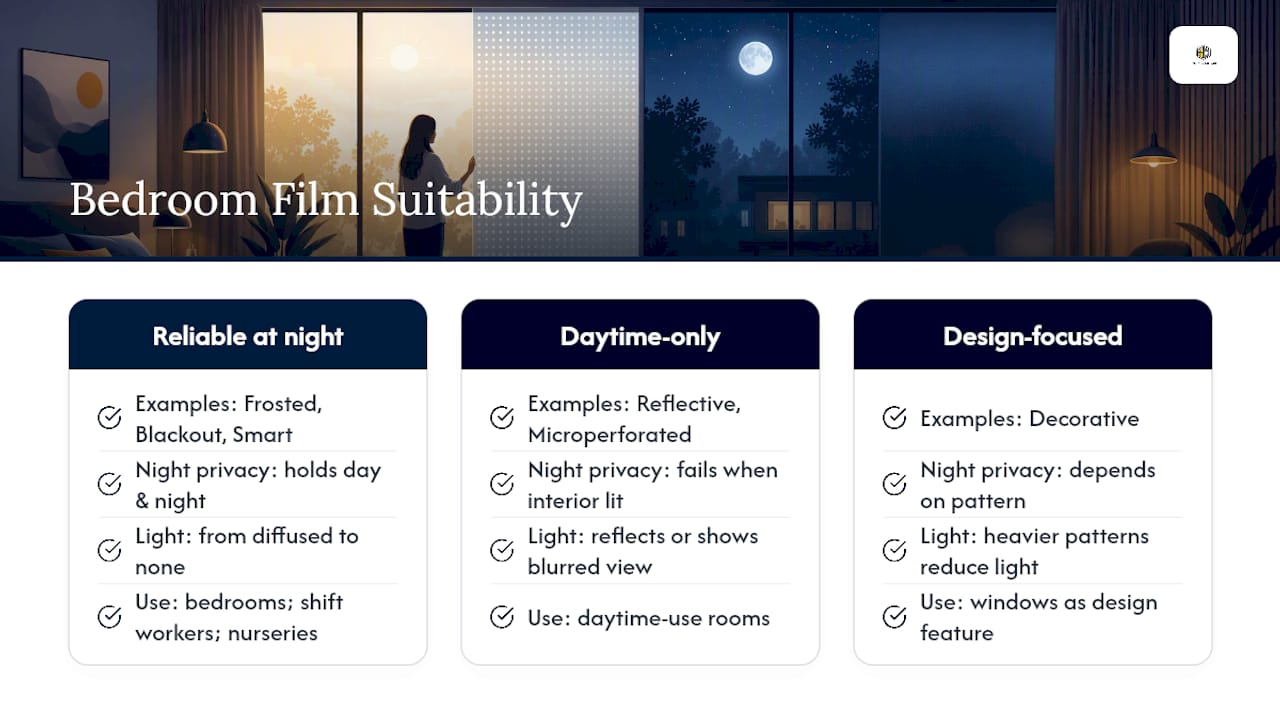
Decorative film brings pattern or a stained-glass look. It’s a strong pick if you want the window to double as a design feature, though heavier patterns cut more light than plain frosting.
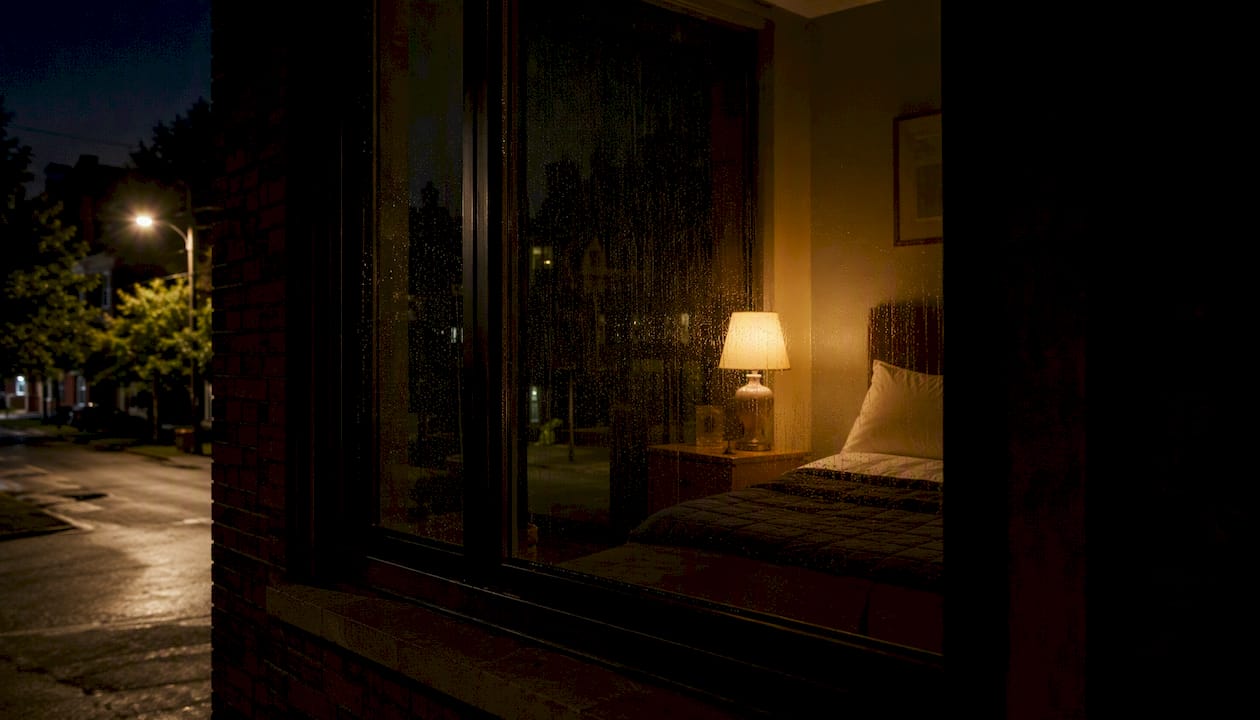
One-way or reflective (mirror) film only works one direction: it reflects a brighter outdoor light back at anyone looking in during the day. Turn on a bedroom lamp at night and that advantage disappears completely.
Microperforated film lets you see a blurred version of the outside while blocking a clear view in, but it’s better suited to daytime-use rooms than bedrooms that need real nighttime coverage.
Blackout film delivers total darkness and total privacy, a natural fit for shift workers or nurseries.
Smart or switchable film flips between clear and opaque electronically. It’s the most flexible option, but the equipment cost puts it out of reach for many bedroom budgets.
Pro Tip: If you’re torn between two opacity levels, go with the stronger one. You can always add sheer curtains for softer daytime light, but you can’t un-frost a film that’s too see-through at night.
Why Do Some Window Films Stop Working At Night?
Reflective and one-way films work through simple light physics: they reflect whichever side is brighter, so daylight bounces back at the street while your indoor view stays crisp. Flip on a lamp at 9 PM, and your bedroom becomes the brighter side. Suddenly your window acts less like a mirror and more like a lit stage window, and anyone outside gets a clear view in.
This is where visible light transmittance (VLT) matters. VLT measures how much light actually passes through the film. A low-VLT reflective film looks like a mirror in daylight, but VLT alone doesn’t guarantee privacy once darkness flips the brightness balance around the glass. Frosted and opaque films don’t have this problem, since they scatter light regardless of which room is brighter.
Films offering genuine 24-hour privacy include:
- Frosted or etched static-cling films with high opacity
- Blackout or room-darkening films
- Densely patterned decorative films with minimal open space
If you already own reflective film and don’t want to replace it, small habits help: keep bright lamps away from the glass, use hooded or downward-facing fixtures, and add a bit of exterior landscape lighting to even out the contrast between inside and outside.
How To Choose The Right Privacy Film For Your Bedroom
Start with your actual use case, not the film that looks nicest online. Do you need round-the-clock privacy on a street-facing window, or are you mainly trying to soften a view while keeping some daylight? Someone who works nights and sleeps during the day has a completely different priority than someone who just wants passersby to stop peeking in.
Once you know your use case, compare these factors:
- VLT and opacity — how much light gets through and how obscured your shape appears from outside
- UV blocking — protects flooring, furniture, and bedding from fading
- Thermal performance — some films also cut heat gain, worth checking if your bedroom runs hot in summer
- Warranty length — commercial-grade films often come with multi-year coverage; cheap clings usually don’t
- Double-pane compatibility — some adhesive films aren’t rated for insulated glass, so confirm before buying
Run through this sequence before deciding:
- Measure each window precisely, including trim and frame
- Order a swatch and test it against your actual glass, both day and night
- Check privacy performance after dark with your normal lighting on
- Decide DIY versus professional installation based on window condition and film complexity
If you’re talking to an installer, ask about warranty terms, surface prep requirements, compatibility with double-pane windows, and expected lifespan. A legitimate installer should hand you sample swatches, real before-and-after photos, and a written warranty without you having to ask twice.
Installation Options, Timelines, and What Bedroom Film Costs
DIY static-cling film is the cheapest entry point and requires no adhesive, but it typically holds up for one to three years before edges start curling. Adhesive DIY film lasts longer but punishes mistakes. Bubbles and uneven edges show up fast if the glass wasn’t cleaned perfectly or the squeegee technique was off.
Professional installation costs more upfront, but it buys you a cleaner finish, better edge adhesion, and a warranty that DIY kits simply don’t offer. For a standard bedroom window, a professional crew usually finishes in about an hour or two. Larger jobs or full-house projects can stretch across a day depending on window count and whether old film needs stripping first.
Price depends on film type, the number and size of windows, and complexity like curved or multi-pane glass. Commercial-grade films installed by a professional like Tint Advantage can last well over a decade with proper care, while consumer-grade static clings are built more for a season or two of casual use.
- Bubbling and peeling are almost always tied to poor surface prep or trapped moisture
- Edge lift often traces back to low-quality adhesive or incorrect trimming
- Professional installation directly reduces all three by controlling for surface cleanliness and cut precision
Practical Tips To Keep Your Bedroom Private After Dark
Layering film with light-filtering shades or sheers gives you flexible control instead of an all-or-nothing setup. Frosted film handles the baseline privacy; a sheer curtain lets you dial things up further whenever you want.
Simple lighting habits matter more than people expect. Move bedside lamps away from the window, choose hooded or downward-angled fixtures, and skip overhead lighting right next to the glass whenever possible.
If you’re stuck with reflective film that’s failing you at night, adding interior blinds is the fastest fix. Swapping to frosted or opaque film is the more permanent one.
Pro Tip: Ground-floor bedrooms and sliding glass doors facing a backyard or street benefit most from combining frosted film with a blackout curtain liner. That pairing solves privacy and blocks early morning light in one move.
UV Protection, Energy Savings, and Safety Benefits Worth Knowing
Privacy films rarely do just one job. Many also block a meaningful share of UV rays and reduce heat gain, which protects flooring and furniture from fading while easing the load on your air conditioner during summer. ENERGY STAR recognizes window film as a legitimate retrofit for improving a home’s energy performance, and 3M’s residential window solutions are marketed around this exact combination: privacy, UV protection, and glare reduction bundled into one product.
Some films also come laminated for added safety, holding shattered glass together if a window breaks. When comparing products, check three numbers specifically: VLT, UV-block percentage, and any manufacturer thermal-performance claims. Those three specs tell you far more than marketing language ever will.
Why Professional Installation Still Wins For Bedroom Windows
Professional installation solves the problems DIY kits struggle with most: bubbling, weak edge adhesion, and film that clouds or peels within a year. A trained installer preps the glass properly, cuts precisely to the frame, and applies film in a way that holds its clarity and opacity far longer than a rushed weekend job.
A typical residential visit follows a straightforward sequence: measure each window, prep and clean the glass, install the film, then a post-install check for bubbles or gaps.
Tint Advantage reports client-reported cooling cost reductions of roughly 10 to 20 percent, with some solutions cutting heat gain by a large majority.
- Warranty coverage protects your investment if film degrades early
- Craftsmanship shows in edge lines, corner cuts, and long-term clarity
- A test install or swatch review is the easiest way to confirm fit before committing
Keeping Bedroom Privacy Film Looking Good For Years
Privacy film is low-maintenance, but it’s not zero-maintenance, and a few bad habits will shorten its life fast. Skip ammonia-based glass cleaners. Ammonia breaks down the adhesive layer over time and can cause the film to cloud or lift at the edges. A soft microfiber cloth with a mild soap-and-water solution is all most films need.
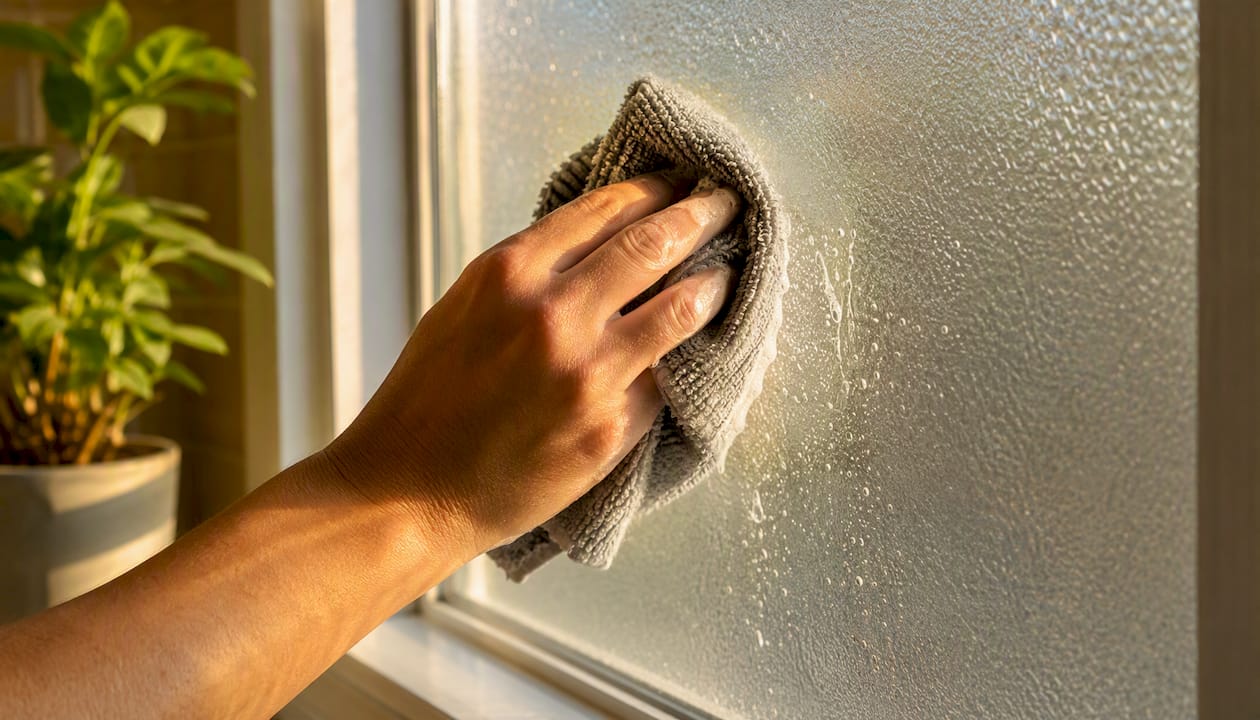
Avoid abrasive sponges or anything with a rough texture, since scratches on frosted or matte film are permanent and impossible to buff out. When cleaning, wipe in one direction rather than scrubbing in circles, and let the film air dry instead of rubbing it with a towel.
If you notice a small bubble forming, don’t pop it with a pin and hope for the best. Small air pockets sometimes work themselves out within the first few weeks after installation as the adhesive fully cures. If a bubble is still there after a month, or if you spot peeling at a corner, that’s usually a sign the film needs professional attention rather than a home fix.
Discoloration is less common with quality film, but cheap consumer clings exposed to direct, intense sun for years can yellow slightly. If that happens, it’s typically a sign the film has reached the end of its usable life rather than something a cleaning routine can reverse. Catching these issues early, and addressing them with a quick call to whoever installed the film, keeps small problems from turning into a full reinstall.
A Practical Note On DIY Versus Professional Installation
For most bedrooms, professional installation is worth it for performance and warranty coverage. Renters or anyone wanting a short-term fix can lean on simple static-cling frosted film, but double-pane glass or oversized windows deserve expert hands.
If You Want Professional Help: What A Consultation Looks Like
Curious what happens once you actually reach out? A typical visit starts with an on-site measurement, a look at your specific windows, and a swatch or demo so you can see how the film performs in your own lighting, day and night. From there, you get a written estimate with no guessing involved.

Tint Advantage handles the parts that trip up most DIY projects, precise cuts around frames, bubble-free adhesion, and a warranty backing the work. Before your visit, snap a few photos of your windows, jot down rough sizes, and note your top priority, whether that’s blocking a nosy neighbor’s sightline or just sleeping in past sunrise without the whole street watching you do it. Ready to see your options in person? Request a free quote from Tint Advantage and get a swatch test scheduled for your bedroom windows.