Save 2–7%: Commercial Window Film ROI for Facility Managers
Commercial energy savings window film can cut cooling costs and smooth out hot spots, but it won’t rewrite your utility budget overnight. Whole-building energy savings typically land in the 2% to 7% range, while cooling-specific reductions can run much higher in the right building. Film earns its keep fastest on buildings with sound glazing, heavy cooling loads, and sun-battered south or west-facing glass.
TL;DR:
- Whole-building energy savings from window film typically range from 2% to 7%, with higher reductions possible in buildings with high cooling loads and south or west-facing glass.
- Spectrally selective films reject up to 97% of infrared heat while maintaining high visible light, making them suitable for bright, tenant-friendly environments.
- The payback period for insulating films usually falls between 3 and 7 years, with larger savings in buildings with single-pane or aging, failing seals.
- Proper installation requires pre-inspection of glass seals to prevent thermal stress, and post-installation maintenance involves gentle cleaning with non-abrasive products.
- Site surveys, pilot installations, and performance verification are essential steps to ensure realistic energy savings and prevent disappointment with film outcomes.
Table of Contents
- Types of Commercial Window Film and When to Use Each
- How Does Window Film Change SHGC and U-Value?
- What Energy and Cost Savings Should You Expect?
- How to Choose the Right Film and Evaluate Installers
- Installation, Maintenance, and Common Technical Concerns
- Omaha Window Tinting’s Take on Real-World Commercial Results
- When Retrofit Film Makes Sense (and When It Doesn’t)
- Ready for a Commercial Window Film Assessment?
- Sources
Types of Commercial Window Film and When to Use Each
Not every film does the same job, and picking the wrong one is the most common way facility managers end up disappointed. Here’s how the main categories break down:
- Reflective film bounces solar energy away using a metalized layer, delivering strong heat rejection but also cutting visible light and giving glass a mirrored look tenants either love or hate.
- Dual-reflective film mirrors on the exterior side while staying more neutral inside, a good compromise for street-facing storefronts that still want some heat control without an aggressive outdoor sheen.
- Spectrally selective film is the tenant-friendly option. It rejects up to 97% of infrared light while keeping visible light high, so offices stay bright without turning into greenhouses.
- Low-e/insulating film targets winter performance, adding a thin layer that behaves like a second pane and helps single-glazed buildings hold heat.
- Ceramic film blends heat rejection with clarity and skips the metal layer entirely, which also avoids radio and cell signal interference.
- Security/safety film is thicker and built for glass retention rather than energy performance, though many products add moderate solar control as a bonus.
Orientation matters as much as film choice. South and west glass in cooling-dominant climates benefits most from solar control film, while north-facing glass in colder regions leans toward insulating film. Interior-applied film is standard for most commercial retrofits; exterior film exists but demands tougher adhesives and more frequent maintenance.
How Does Window Film Change SHGC and U-Value?
Two numbers drive almost every energy claim you’ll hear about window film: solar heat gain coefficient (SHGC) and U-value. SHGC measures how much solar energy passes through the glass and turns into heat inside your building. U-value measures how easily heat moves through the glass assembly, whether that’s cold air working its way in during winter or air conditioning trying to work its way out in summer.
Applying film lowers SHGC by blocking a portion of incoming solar radiation before it ever reaches the interior. Insulating films also improve U-value by adding a thin buffer layer, similar in concept to the secondary glazing panels tested by GSA and PNNL, where center-of-glass U-factor improved from 1.15 to 0.55.
Quick numbers to know:
- Spectrally selective films can reject infrared heat while preserving visible light, avoiding the dim, tinted feel some tenants complain about.
- Lower peak cooling demand means smaller HVAC swings and fewer uncomfortable afternoon hot spots near west-facing windows.
A reflective film rejecting heavy solar loads can raise glass surface temperature significantly, which is why sealed insulated glass units sometimes need a professional check before installation to rule out thermal stress risk.
What Energy and Cost Savings Should You Expect?
Realistic numbers matter more here than marketing copy. The GSA/PNNL evaluation modeled whole-building savings between 2% and 7%, depending heavily on climate and how poor the existing glazing was to begin with. A hotel case study modeled in peer-reviewed research found something worth remembering: annual cooling energy dropped by up to 35%, yet whole-building savings for that same building landed around just 2%. Cooling reduction and overall energy savings are not the same metric, and treating them as interchangeable is where a lot of ROI math goes wrong.
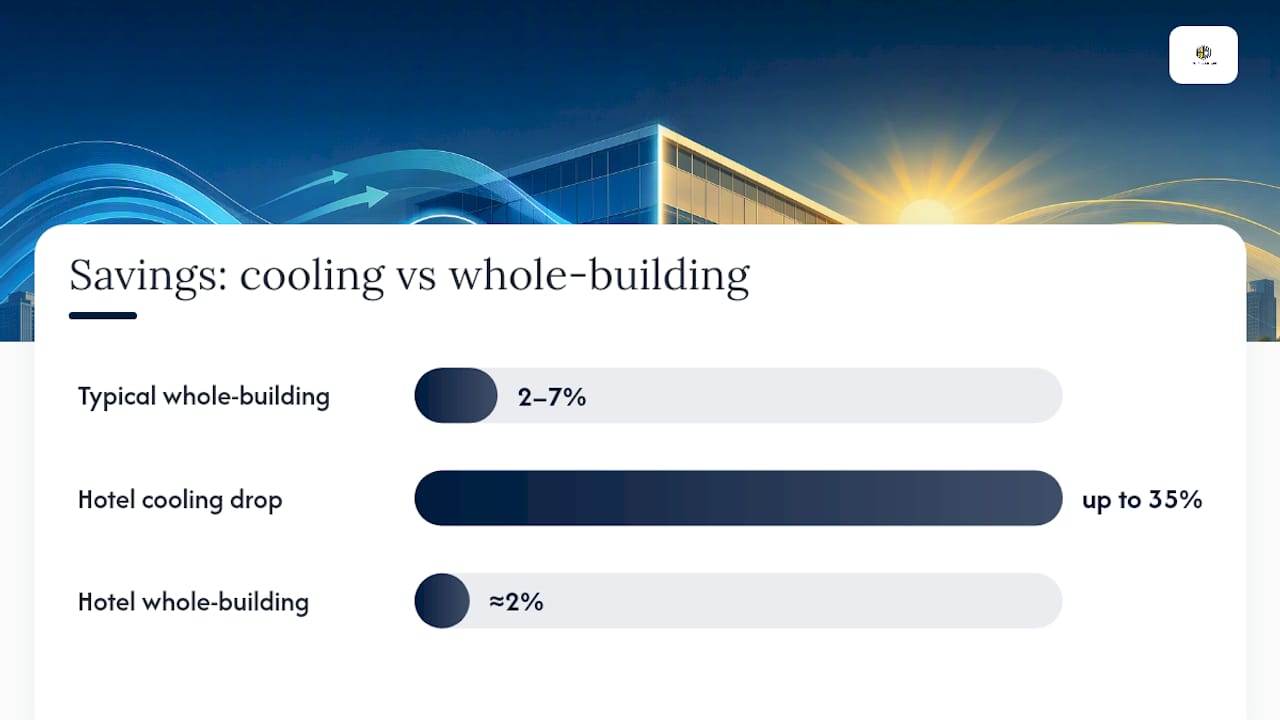
Buildings with single-pane glass or aging, failing seals tend to see the largest relative gains, since there’s more room for improvement. Industry sources commonly cite payback windows in the 3 to 7 year range for insulating films, though secondary glazing panels and newer film technologies can stretch that timeline further depending on production scale and local utility rates.
Before committing budget, run a simple gut check:
- Total window area and current baseline energy use by month
- Local electricity and gas rates, since payback swings hard with utility pricing
- Available rebates, utility incentives, or LEED credit potential that shorten payback
How to Choose the Right Film and Evaluate Installers
Start with your primary objective. Are you chasing cooling relief, glare control, winter insulation, or all three? That answer narrows the field fast.
- Define your goal and façade profile. Match film category to orientation, light levels, and budget before you request quotes.
- Ask for NFRC-certified performance numbers. The National Fenestration Rating Council maintains a certified directory for SHGC, visible transmittance, and U-value, and certified numbers beat marketing claims every time.
- Request written performance estimates and warranty terms. A serious installer will put projected outcomes and coverage details in writing, not just verbally promise results.
- Vet the installer directly. Ask about pre-install glass inspection procedures, experience with insulated glazing units, references from similar commercial buildings, and whether they’ll provide a sample mockup.
Watch for red flags like installers who skip the pre-install inspection entirely or won’t commit to numbers on paper.
Pro Tip: Run a pilot install on one façade or floor before committing to the whole building. It’s the cheapest way to confirm real-world glare, comfort, and temperature results before you sign off on a larger contract.
Installation, Maintenance, and Common Technical Concerns
A typical commercial install moves floor by floor or façade by façade, with timing depending on total glass area and building access. Before any film goes on, an experienced installer should inspect insulated glass units for existing seal issues. Applying film to a compromised seal can accelerate failure and create thermal stress problems that show up months later, not on install day.
Once film is in place, maintenance is refreshingly simple:
- Use non-abrasive cleaners and soft cloths, avoiding ammonia-based products that can degrade the film over time.
- Skip razor blades or anything that could scratch the surface.
- Watch for edge lifting or bubbling, which usually signals a warranty claim rather than a DIY fix.
Consider replacement or secondary glazing instead of film when seals have already failed, local code requires a specific glazing standard, or you need insulating performance beyond what a retrofit film can realistically deliver.
Omaha Window Tinting’s Take on Real-World Commercial Results
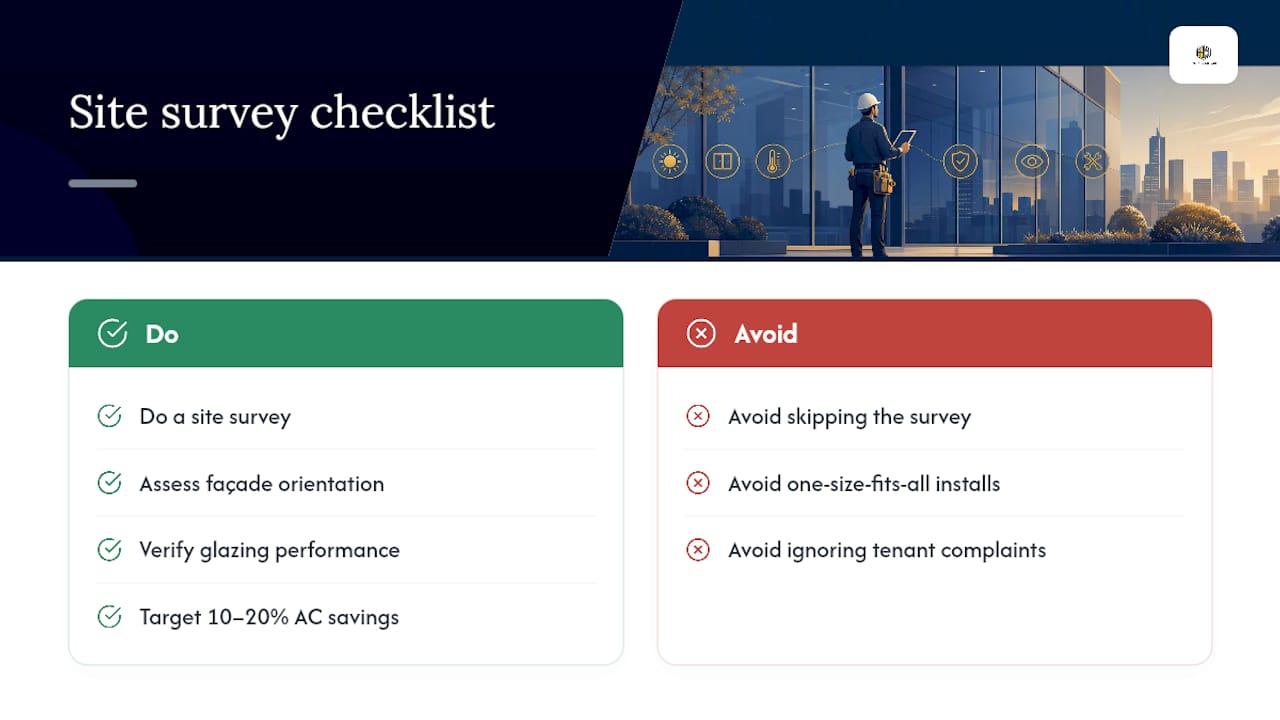
Tintadvantage focuses on high-performance commercial film with an emphasis on precise, customized installation rather than one-size-fits-all product pushes. Reported client outcomes include AC cost reductions in the 10% to 20% range, though results vary based on building orientation, existing glass condition, and local climate.
A proper site survey covers façade orientation, current glazing performance, tenant comfort complaints, and realistic payback expectations before a single square foot of film gets ordered. That groundwork is what separates a project that hits its projected savings from one that falls flat.
When Retrofit Film Makes Sense (and When It Doesn’t)
Retrofit film is the smart call when your insulated glass units are intact, your energy bill is cooling-dominant, and your budget can’t stretch to full window replacement. It’s a weaker fit when seals have already failed, when code changes force a glazing upgrade regardless of film, or when a larger renovation is already on the five-year plan.
My advice: get a site survey first, pilot one façade, then run the ROI math with your actual utility rates before signing anything building-wide.
— Ron
Ready for a Commercial Window Film Assessment?
Reading about SHGC and payback ranges only gets you so far. Every building’s glass, orientation, and HVAC setup is different, and the fastest way to know your real numbers is a site survey, not a spreadsheet. Tintadvantage specializes in high-performance commercial film installed with the kind of precision that keeps insulated glass units intact and warranties valid.

Performance varies by building, climate, and glass condition, so we won’t promise a number we can’t back up. What we will do is walk your façade, check your existing glazing, and give you a straight answer on what film can realistically save you. If you’re weighing film against other envelope upgrades, pairing it with improvements like energy-efficient interior doors can compound the comfort gains. Ready to see your numbers? Request a commercial window film survey and get a written estimate before you commit to anything.
Sources
- GPG 054 Insulating Window Panels Findings (GSA, April 2024)
- 3M™ Sun Control Window Film Prestige Series (product technical page)
- Impact of Window Films on the Overall Energy Consumption of Existing UK Hotel Buildings (MDPI)
- National Fenestration Rating Council (NFRC)