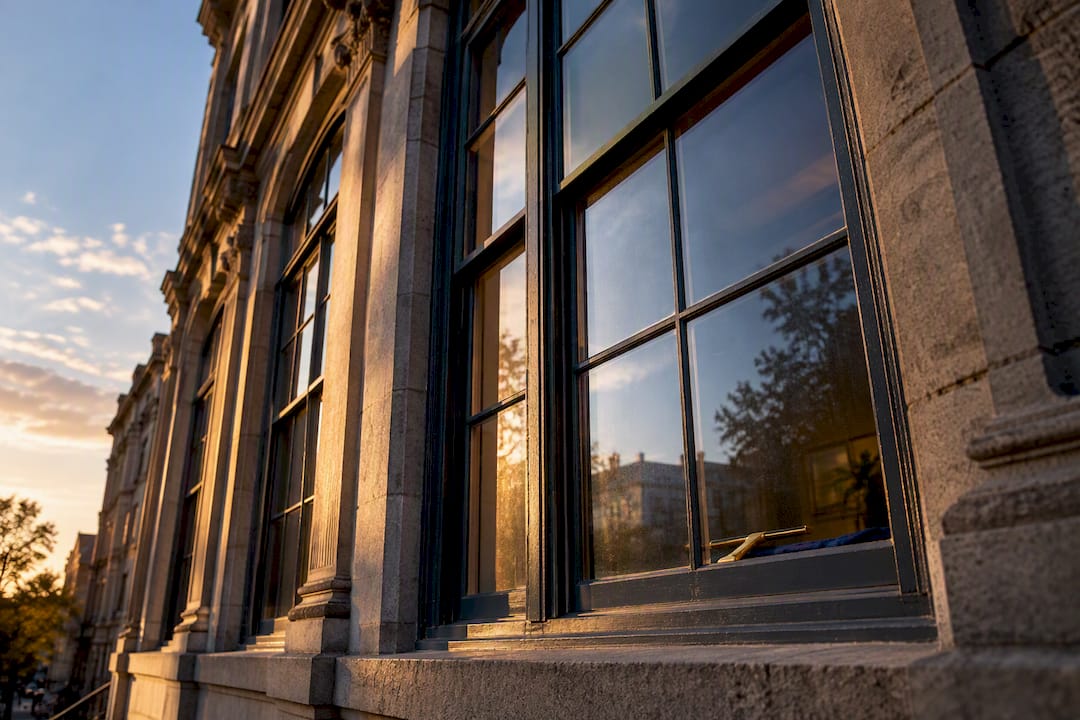
Start With One Test Lite: NPS Ready Historic Window Film Specs
Interior architectural window film is a reversible, preservation-friendly way to add UV protection, solar control, and safety to historic windows when it’s specified and installed correctly. Film enhances what’s already there instead of replacing it, so most preservation reviewers see it as a genuine ally, not a threat. Just remember: it’s an upgrade, not a substitute for real conservation work, so check with your local historic review board and document your specs before you get too far down the road.
TL;DR:
- Reversible interior film provides UV protection that blocks over 99% of UVA and UVB rays, significantly slowing fading of historic furnishings and artworks.
- Properly selected high-VLT, low-reflectivity films offer UV and solar heat rejection while maintaining appearance, reducing rejection risk from review boards.
- Film improves energy efficiency temporarily but does not replace the need for full insulation if sashes are severely deteriorated or glass is cracked.
- Approval relies on documenting test applications, including VLT, reflectivity, UV block, and solar energy rejection, with emphasis on small, reversible tests.
- Installation typically takes one day for residential buildings, with routine maintenance involving gentle cleaning and avoiding abrasive products during curing.
Table of Contents
- Why Historic Building Window Film Makes Sense for Preservation
- Which Film Type Fits Your Historic Windows?
- Getting Your Historic Window Film Approved
- How to Specify Film and Vet an Installer
- What to Expect During Installation and Beyond
- A Real-World Example: Museum-Grade Results
- When Film Is the Right Call, and When It Isn’t
- Get a Sample Application Started with Tintadvantage
- Sources
- FAQ
Why Historic Building Window Film Makes Sense for Preservation
Here’s the thing about historic windows: they’re often the most character-defining feature of a building, and also the most fragile. Film lets you protect that character while fixing the problems old glass creates.
Because it goes on the interior surface, film doesn’t touch the exterior appearance your review board cares about most. That’s a big deal, and similar to how new interior doors improve energy efficiency in older Portland homes by preserving original fabric while enhancing performance. Federal guidance from Energy frames retrofits like film as a cost-effective alternative to full replacement in plenty of situations, especially when the original sashes and glazing are structurally sound.
What you actually get:
- Reversibility: film can be removed without damaging historic glass or wood, which is exactly what preservation review boards want to hear
- UV protection: quality films block more than 99% of UVA and UVB rays, according to the Skin Cancer Foundation, which slows fading on wood floors, drapery, and any collections near the glass
- Solar heat rejection: the right film cuts cooling load noticeably, though vendors should back specific percentage claims with lab data
- Safety and security: film adds shatter resistance to brittle, single-pane glazing, particularly at ground level where impact risk is highest
Statistic Callout: Quality UV-blocking films can stop more than 99% of UVA and UVB transmission, per the Skin Cancer Foundation, which is the benchmark to ask installers to prove with test data.
One honest limitation: film improves performance, it doesn’t duplicate what true insulating glass does. If your building needs full thermal replacement, film buys you time and comfort. It’s not a permanent fix for a failing sash.
Which Film Type Fits Your Historic Windows?
Not every film does the same job, and picking the wrong one is how projects get rejected by review boards or, worse, look wrong on a landmark facade. Match the film family to the actual problem you’re solving.
- Clear high-VLT UV/solar films — best for fading control on street-facing facades where any visible tint would raise eyebrows; nearly invisible, strong on UV block
- Spectrally selective and low-e films — stronger heat and infrared rejection while still letting in daylight, good for buildings with heavy afternoon sun exposure
- Ceramic films — near-invisible performance upgrade, often the safest bet for landmark facades where appearance scrutiny is highest
- Safety and security films — rated by mil thickness, chosen for glass-holding strength on ground-floor or high-traffic windows
- Decorative films — reserved for interior or non-street-facing glass, since patterned or frosted looks rarely clear historic review
High-VLT, low-reflectivity options are typically the smart first choice for visible facades. They deliver real UV and heat benefits while giving reviewers the least to object to.
Getting Your Historic Window Film Approved
Historic review boards aren’t trying to slow you down. They’re trying to protect character, and film usually helps that cause rather than hurting it. The Secretary of the Interior’s Standards for Rehabilitation treat reversible interior changes as acceptable when they don’t damage historic materials, and that’s the language your submission should lean on.
Local reviewers usually zero in on two things: exterior reflectivity and any visible tint shift. Here’s a workable approval sequence:
- Research the standard. Cite NPS rehabilitation guidance directly in your application so reviewers see you’ve done the homework.
- Request a sample application. Install film on one test lite before committing to the whole building.
- Compile your product data. Include VLT, reflectivity, UV block percentage, and total solar energy rejected (TSER).
- Document with photos. Show the test lite in different light conditions.
- **Attach installer credentials and prior case studies, ideally from other historic properties.
Pro Tip: File your sample application as a small, single-lite test rather than a whole-building proposal. Boards approve small, reversible tests far faster than sweeping requests, and a successful test lite becomes your best evidence for the bigger application.
If your board still balks, it’s usually because the film reads too reflective or too dark from the street. At that point, switch to a higher-VLT ceramic option or revisit whether full repair is the better path.
How to Specify Film and Vet an Installer
Start with your actual goal, not a product name. Fading problem, heat problem, security concern, glare complaint. Each points to a different spec.
Once you know the goal, ask for these numbers in writing: UV block percentage, TSER, visible light transmission (VLT), infrared rejection, visible reflectivity, and mil thickness if you’re considering security film. Any installer who can’t produce lab-tested figures for these metrics isn’t ready for a historic building.
- Require an on-site sample application to an actual in-situ window, not a showroom sample
- Ask for references from other historic or landmark projects, with photos
- Confirm warranty terms and whether professional removal is included if the board later requires it
- Ask directly how they protect surrounding trim and glazing putty during install
Statistic Callout: Installed costs for heritage-appropriate solar and UV films commonly fall in a modest per square foot range, while thicker safety and security films run higher, and industry installer reporting notes that divided-lite windows raise labor costs because of the extra cutting and fitting involved.
Get quotes broken out by film type and lite count, since a window with 12 small panes costs more to film than one large sheet of glass at the same square footage.
What to Expect During Installation and Beyond
Interior installation is the norm for historic buildings, and a competent crew works room by room to keep disruption low. Most residential jobs wrap in a single day; larger commercial or institutional buildings take longer depending on lite count.
- Technicians clean and prep each pane, then apply film to the interior surface only.
- The film cures over several weeks. Small water pockets or slight haze are normal during this window and typically clear on their own.
- Avoid ammonia-based or abrasive cleaners until curing finishes.
- Ongoing maintenance is simple: gentle glass cleaner and a soft cloth, on the same schedule you’d already use for the windows.
Pro Tip: Don’t panic if you spot faint bubbles or a milky haze in the first few weeks. That’s normal curing behavior, not a failed installation, and it should clear up on its own.
Lifespan varies by film type and sun exposure, generally running well over a decade for quality products. Our guide to window film lifespan covers what shortens or extends that window. When removal is eventually needed, hire a professional. Historic glass is often old, brittle, and expensive to replace if a DIY removal goes wrong.
A Real-World Example: Museum-Grade Results
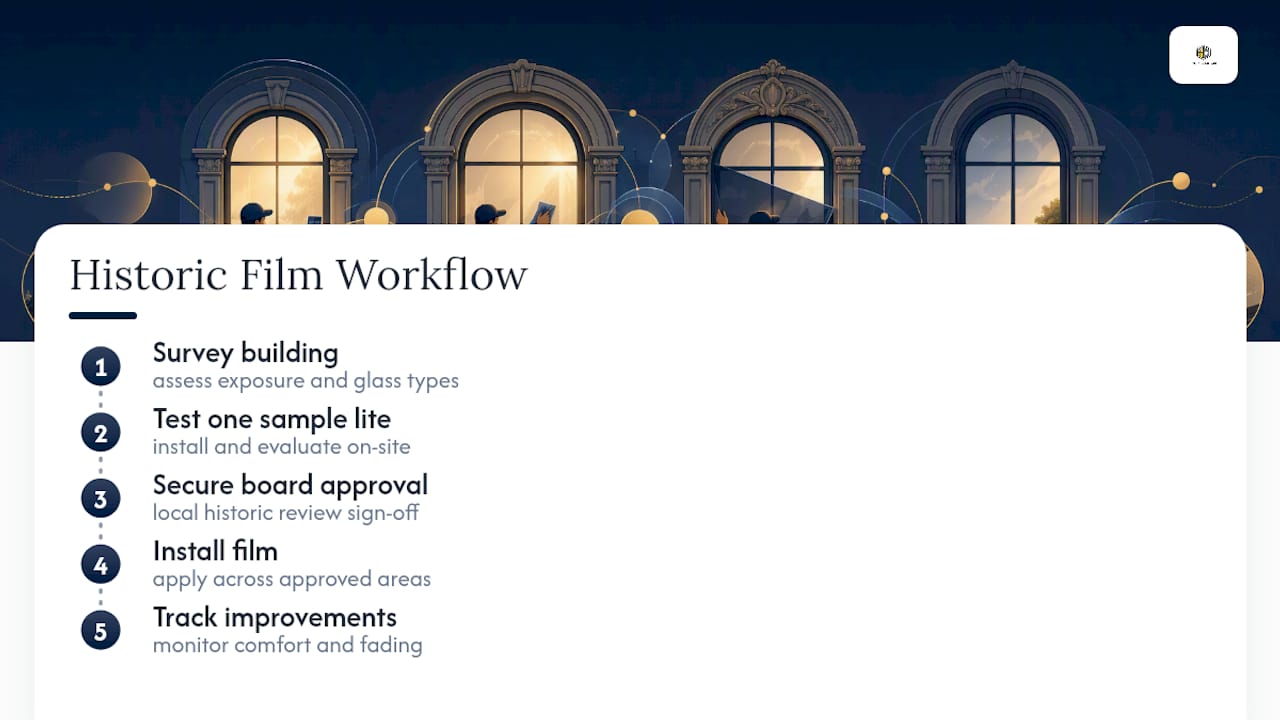
A well-documented case comes from Deepwood Estate, where a historic museum installed film to protect sensitive collections from UV and infrared exposure while keeping the facade’s original appearance intact for local historic review. The workflow followed the same pattern we recommend: survey the building, test a sample lite, secure board approval, install, then track the improvement in comfort and fading.
Similar patterns are often seen in residential and commercial window film installations, with clients reporting reduced cooling costs and noticeably less glare after installation. Treat any specific savings figure as a claim worth verifying against your own building’s exposure and glass type, not a guarantee.
When Film Is the Right Call, and When It Isn’t
Film earns its place when the glazing is structurally sound and the goal is a reversible performance boost, not a full window overhaul. If sashes are rotted, glass is cracked, or your local ordinance flatly prohibits interior films on landmark structures, film isn’t the fix. That’s a repair or historically accurate replacement job. For high-value collections or nationally significant landmarks, loop in a conservation architect before you commit either way.
— Ron
Get a Sample Application Started with Tintadvantage
Tintadvantage gives historic building owners something most film installers can’t: a genuinely customized approach built around precise installation and craftsmanship, not a one-size-fits-all roll of film. That matters enormously on a landmark facade, where a botched install or the wrong VLT can mean redoing an entire review submission.

We work through architectural solar control, low-e, ceramic, and safety film options, all installed with the same attention to detail whether it’s a single historic home or a full commercial landmark. Our recommendation for any preservation project: start with an on-site sample application on one test lite and a documented spec sheet your review board can actually evaluate, rather than guessing at what they’ll approve. Pricing for residential solar and heat control film runs $8 to $12 per square foot, with ceramic and security options priced separately depending on thickness and coverage.
If you manage a historic residence, request a residential estimate to see what a sample application would look like on your building. Facility managers overseeing larger landmark or institutional properties can start with our commercial services page to schedule a site survey.
Sources
- The Secretary of the Interior’s Standards for Rehabilitation — NPS
- UV Window Film & Tint — The Skin Cancer Foundation
- Historic Deepwood Estate success story — Solar Gard
- Window film for heritage windows — Ecovision
FAQ
What Are the Downsides of Using Window Film?
Film can shift slightly in color or clarity over its lifespan, and low-quality products may bubble or peel prematurely. It also doesn’t match the thermal performance of true insulating glass, so buildings with severe heat loss may still need more than a film retrofit.
How Much Does It Cost to Restore Historic Windows?
Full restoration costs vary widely by window condition and glazing count, often running well beyond film pricing since it involves sash repair or glass replacement. Film is typically the lower-cost first step, with solar and UV films running $8 to $12 per square foot for comparison.
What Is Architectural Window Film?
Architectural window film is a category of film engineered for building facades rather than vehicles, covering solar control, low-e, ceramic, and safety varieties. It’s designed to be applied to the interior glass surface without altering the exterior appearance, which is why it works well for historic building window film projects.
What Are Old-Style Windows Called?
Historic windows are commonly called single-hung or double-hung sashes, and many features divided lites held together with wood muntins. These divided-lite configurations are exactly what raises labor costs when specifying film, since each small pane needs individual cutting and fitting.