Don't Trust Storm Safety Window Film Without Anchoring for Homeowners
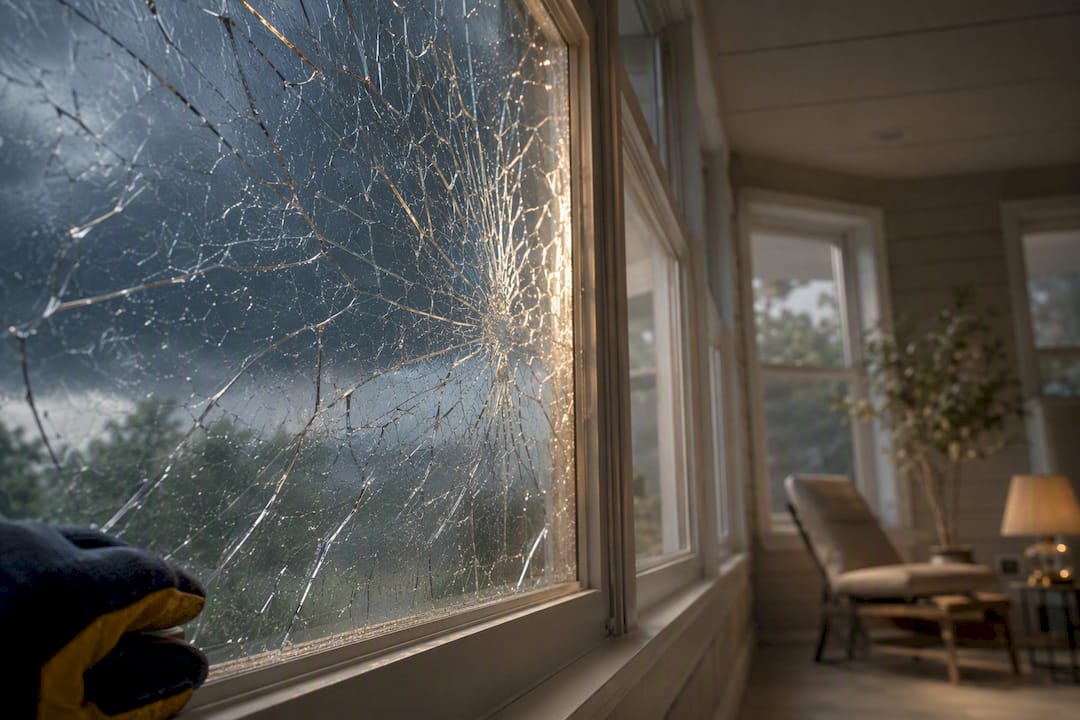
Storm safety window film helps keep shattered glass intact and reduces the risk of flying shards, but it is generally not a substitute for impact-rated windows or properly certified shutters in the most severe hurricane exposures. Think of it as a strong safety net, not a suit of armor. Get the anchoring right, and it does its job well. Skip that step, and you’re paying for a false sense of security.
TL;DR:
- Safety film alone cannot prevent window breakage from high-velocity debris or strong wind pressure unless it is properly anchored to the frame.
- Anchorage systems such as mechanical anchors or wet-glaze hardware are essential for film to meet hurricane impact standards and prevent windows from blowing out.
- Thicker film (8 to 12 mils) offers better glass retention against debris but can cause more optical distortion and higher costs, so selection depends on exposure level.
- Proper installation requires thorough site assessment, careful application, edge sealing, and curing, as DIY kits often lack these critical steps.
- For high-exposure areas, impact-rated windows or certified shutters remain the primary protection, with film acting only as a secondary safeguard.
Table of Contents
- How Storm Safety Window Film Works and What It Can Actually Do
- Where Film Falls Short in Hurricane-Prone Areas
- What Makes Film Actually Storm-Ready: Anchoring and Installation
- Choosing the Right Film Thickness for Your Home
- How to Pick an Installer Without Getting Burned
- Keeping Filmed Windows Working Long Term
- How Tintadvantage Approaches Storm-Safety Installations
- Why Anchoring, Not Marketing, Should Drive Your Decision
- Get a Storm-Ready Film Assessment for Your Home
- Sources
- FAQ
How Storm Safety Window Film Works and What It Can Actually Do
Here’s the simple version: safety film is a thin, tough layer of PET plastic bonded directly to your glass with an adhesive. When the glass cracks, the film holds the fragments together instead of letting them explode into the room like confetti made of razor blades.
That’s the whole point, and it works. 3M’s building safety solutions note that film reinforces glass by holding fragments together, which cuts down significantly on injury risk during windstorms, break-ins, or even a kid’s baseball gone wrong. The film also slows how fast an object can push through the opening, buying you precious seconds.
There’s a bonus most homeowners don’t expect. Many films block up to 99% of UV rays while they’re at it, which helps fade less furniture and cooler rooms in the summer. That’s the kind of everyday win that makes the investment feel worthwhile even on a calm, sunny day.
What it won’t do: stop a two-by-four launched at 100 miles per hour or keep a window in its frame if the frame itself gives out.
- Holds shattered glass together, reducing flying shards
- Slows debris intrusion, doesn’t guarantee it stops
- Adds UV and glare reduction as a side benefit
- Does not strengthen the glass itself against impact
Pro Tip: Ask your installer whether the film comes with a documented anchoring option. Film without anchoring is like a seatbelt that isn’t buckled in. It’s there, but it’s not doing its full job.
Where Film Falls Short in Hurricane-Prone Areas
Here’s where we need to be honest with you, because a lot of marketing out there isn’t. Film alone is not a certified hurricane-impact system in high-velocity wind zones, and it won’t earn Miami-Dade High-Velocity Hurricane Zone approval unless it’s part of a tested, anchored assembly. Florida PACE’s storm prep guidance is blunt about this: film helps hold glass together if it shatters, but it won’t stop debris from breaking through, so it belongs in the “secondary protection” category, not the “hurricane solution” category.
The failure modes matter here. A heavy projectile, like a chunk of roofing debris, can still punch clean through filmed glass. And even when the glass stays bonded to the film, wind pressure can push the whole pane out of its frame if there’s no attachment holding it there. One practitioner resource put it plainly: without mechanical anchoring, filmed glass can still blow out of the opening during extreme wind events.
- Not a substitute for shutters or impact windows in coastal, high-exposure zones
- Heavy projectiles can still penetrate filmed glass
- Unanchored film can’t stop the whole pane from leaving the frame
- Some insurers and codes won’t grant mitigation credit for film alone
Comparing shutters and impact-rated windows against film side by side, the pattern is consistent: exposure level should drive your primary protection choice, with film playing a supporting role.
What Makes Film Actually Storm-Ready: Anchoring and Installation
This is the part almost nobody talks about, and it’s the whole ballgame. Film that isn’t anchored to the frame is basically decoration with good intentions. Madico’s SafetyShield documents several anchoring methods, including FrameGard mechanical anchors, Wet Glaze systems, GullWing attachments, and LifeLine-style restraint hardware, each designed to keep the filmed glass locked into the opening during extreme events.
A proper professional install typically follows these steps:
- Site assessment to measure openings and check frame condition
- Glass scraping and thorough cleaning to remove contaminants
- Application of a slip agent so the film can be positioned accurately
- Careful positioning and squeegeeing to remove air and excess solution
- Trimming to the exact frame edge
- Edge sealing with the appropriate sealant, often a wet-glaze adhesive
- Curing time, followed by a final inspection
Installation guidance from 3M treats every one of these steps as necessary for real-world performance, not optional polish.
DIY kits skip most of this. Air bubbles, weak edge seals, and no anchoring hardware are the usual result, which is why so many self-installed jobs underperform when it matters. Ask any installer for their warranty terms, test documentation, and a signed installation checklist before you sign anything.
Choosing the Right Film Thickness for Your Home
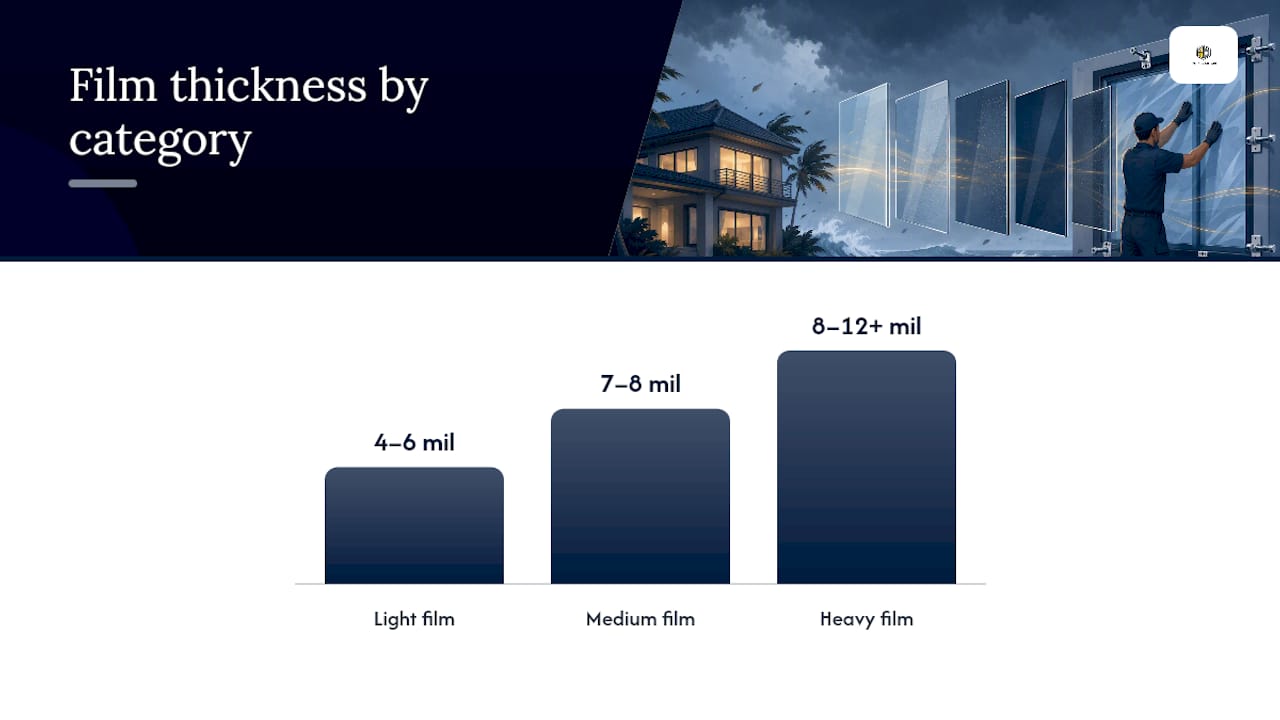
Film thickness is measured in mils, and it’s the single biggest lever you can pull between budget protection and serious glass retention. Light security film runs 4 to 6 mils, decent for opportunistic break-ins and minor storm debris. Medium film at 7 to 8 mils steps up retention noticeably. Heavy film, 8 to 12 mils or more, is what you want when flying debris and repeated impacts are a real concern.
Thicker isn’t automatically better for every window, though. Heavier film can introduce slightly more optical distortion, costs more, and takes a steadier hand to install cleanly. Comparing thickness options in more detail helps you match the right mil count to your actual exposure instead of guessing.
- Tensile strength and elongation ratings (how much stretch before tearing)
- UV rejection percentage
- Warranty length and what it covers
- Compatibility with your chosen anchoring system
For most inland or moderately exposed homes, film plus anchoring is a smart, phased upgrade. For beachfront or HVHZ properties, impact windows or certified shutters should be your primary line of defense, with film adding a secondary layer of safety.
How to Pick an Installer Without Getting Burned
Ask these questions before you sign a contract:
- Do you install anchoring systems, or just film alone?
- Can you show test reports or lab documentation for the products you use?
- What does the written warranty cover: materials, labor, or anchoring hardware?
- Are you licensed and insured in this state?
- Can I see photos of past installs or talk to a past customer?
If a salesperson calls their film a direct hurricane substitute with no mention of anchoring, that’s a red flag. Vendor claims of hurricane protection without test evidence should be treated as marketing language, not fact.
Cost usually scales with window count, film mil, the anchoring system chosen, and how much frame repair is needed before install. A single standard window with basic film and anchoring typically takes under an hour; a full-home package with wet-glaze anchoring across a dozen windows can stretch across one to two days. Get at least two written quotes and compare what’s actually included, not just the bottom line.
Keeping Filmed Windows Working Long Term
Give new film a few days to fully cure before cleaning it, and stick to non-abrasive cloths and mild solutions. Proper cleaning habits extend the life of the film and protect the edge seal, which is the first thing to check during your annual inspection.
Warranties usually separate material defects from labor and anchoring hardware, so read the fine print on what’s excluded. Insurers and building codes vary widely. In HVHZ regions like parts of South Florida, film alone typically won’t earn mitigation credit no matter how it’s installed. Keep photos of the pre-install condition, your anchoring hardware, and the signed installation checklist. If you ever file a claim, that documentation is what gets you paid.
- Wait for full cure before first cleaning
- Use non-abrasive cleaners only
- Inspect edge seals annually
- Store install records and photos for insurance purposes
How Tintadvantage Approaches Storm-Safety Installations
A professional window film installer should focus on getting the details right the first time: correct film selection, clean application, and attention to the edges and seals that make or break long-term performance. Comfort and energy work, like reducing heat gain and glare, reflect the same precision important in safety-focused projects.
A storm-safety film install is only as good as its weakest edge seal. We treat site assessment, correct anchoring compatibility, and documentation as non-negotiable parts of every job, not extras.
…
Why Anchoring, Not Marketing, Should Drive Your Decision
Most articles on this topic bury the anchoring question under a pile of UV-protection stats and glare-reduction talk. That’s backwards. The single fact that determines whether storm safety window film actually protects you during a real event is whether it’s mechanically or chemically attached to the frame. Skip that step, and you’ve bought a product that performs beautifully in a showroom demo and poorly in a real windstorm.
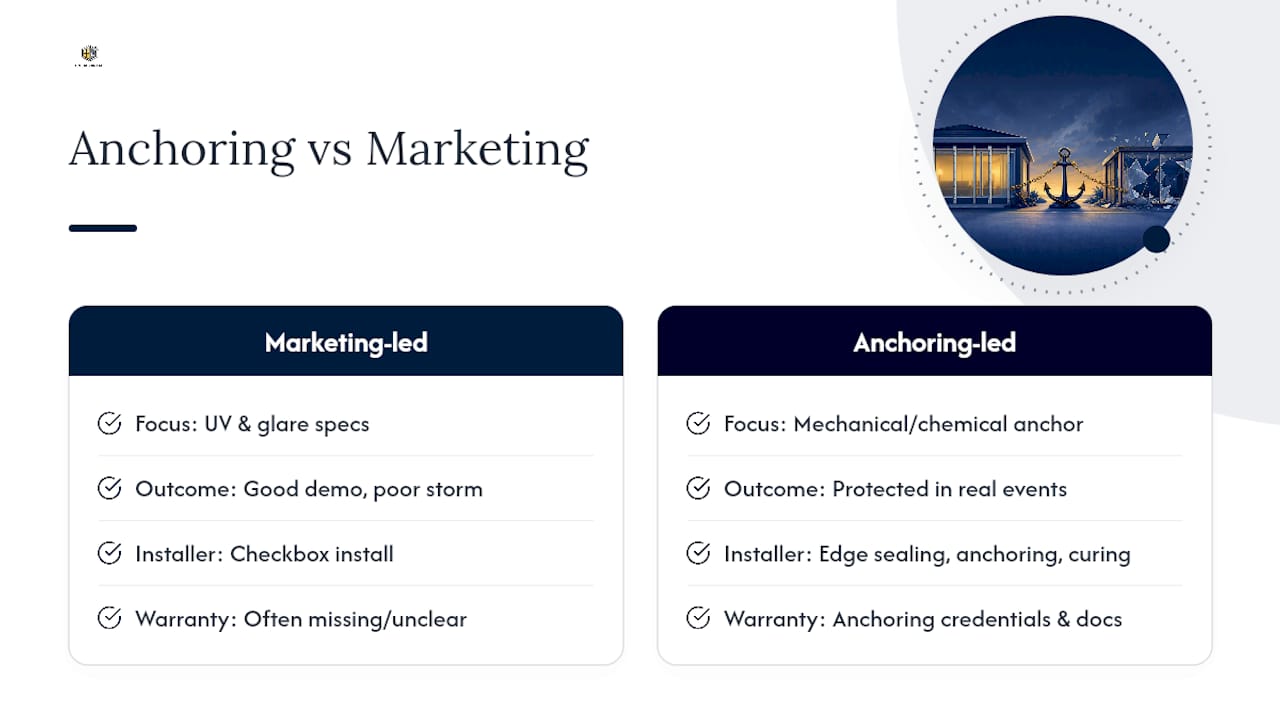
The conventional advice treats film like a checkbox: install it, feel safer, move on. We’d push back on that. Film is a tool within a larger system, and its effectiveness depends entirely on the installer’s willingness to do the unglamorous parts: proper edge sealing, correct anchoring hardware, curing time, documentation. None of that shows up in a glossy brochure.
If you’re weighing this decision, prioritize the installer’s anchoring credentials and warranty documentation before you even ask about film thickness or brand. A mediocre film installed with a proper anchoring system will likely outperform premium film with none. That’s the uncomfortable truth most sales conversations skip past.
— Ron
Get a Storm-Ready Film Assessment for Your Home
Some window film sellers offer on-site assessments that consider frames, exposure, and appropriate anchoring systems rather than providing generic quotes over the phone.

A thorough process includes reviewing film selection, anchoring compatibility, and warranty coverage before installation begins, so customers know what to expect. That kind of upfront clarity is the difference between film that performs when it matters and film that just looks good on a sunny afternoon. If you’re ready to find out what your home actually needs, request a window film assessment and get a straight answer on the right protection level for your property.
Sources
- Safety | 3M Building Window Solutions | 3M United States
- SafetyShield | Madico, Inc.
- How to Protect Windows During a Hurricane | Florida PACE
- 3M impact protection adhesive / installation guidance (technical bulletin)
FAQ
Does Window Safety Film Actually Work?
Yes, for its intended purpose: it holds shattered glass together and reduces flying-shard injuries, especially when paired with a proper anchoring system that bonds the film to the frame.
How Can I Protect My Windows From Storms?
Layer your protection: film with anchoring for moderate exposure, and impact-rated windows or certified shutters as primary defense in high-velocity wind zones.
Is Taping Windows Recommended by FEMA?
No. FEMA and other emergency-preparedness authorities have long advised against taping windows before a storm, since tape does nothing to strengthen glass and can even worsen shard size during breakage.
What Is the Best Safety Film for Windows?
There’s no single best film for every situation. The right choice depends on mil thickness, your exposure level, and whether the film is paired with a tested anchoring system like wet-glaze or mechanical anchors.