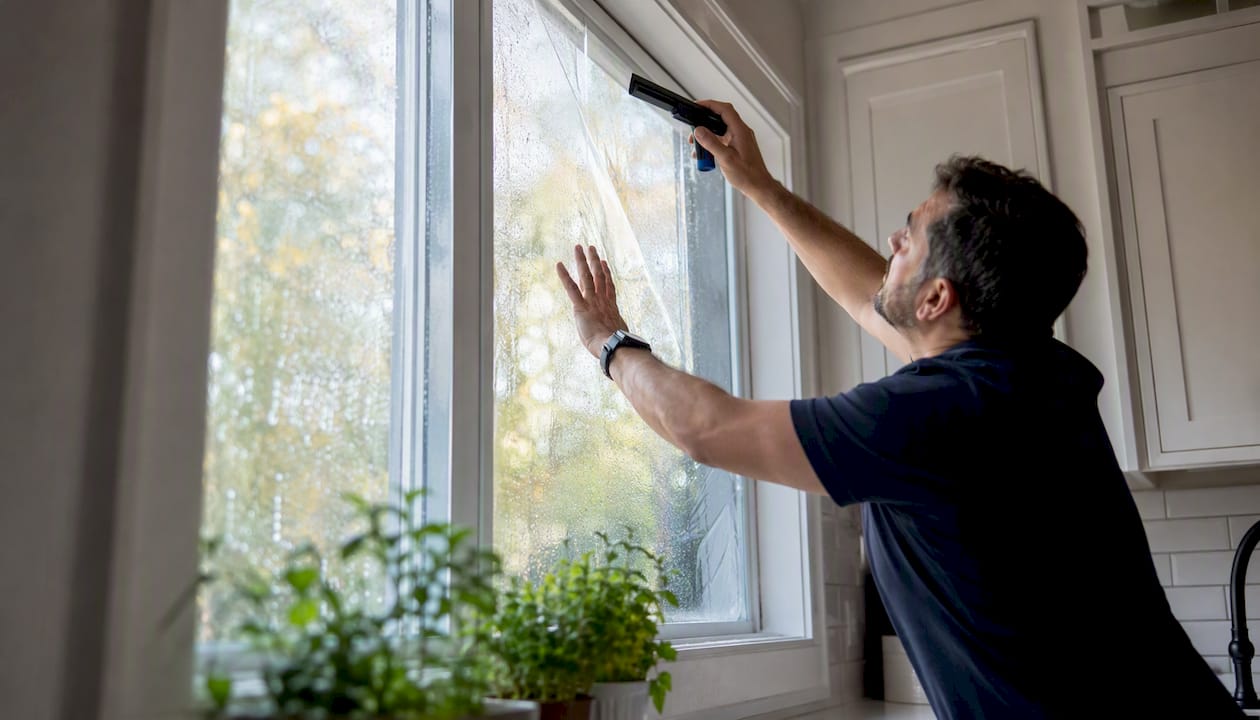
Window Film on Double Pane Windows: Safe Options for Homeowners
Yes, you can apply window film on double pane windows — but only when the insulated glass unit (IGU) is in good condition and you choose a film rated for double-pane use. The wrong film on a compromised IGU can cause thermal fracture or accelerate seal failure. Before you buy anything, record three things: whether your glass has a low-E coating, whether the panes are tempered, and whether you see any fogging or condensation between the panes. If all three check out, compatible film options exist that are both safe and effective. If any red flag appears, call a certified installer before proceeding.
Quick compatibility checks to do right now:
- Look for fogging or moisture trapped between the panes (a failed seal means no film until repaired)
- Check for a low-E coating using a lighter or match held near the glass — a double or colored reflection indicates a coating
- Note your window orientation (south and west exposures absorb significantly more solar load)
- Photograph the window label or etching in the corner for tempered glass markings
Pro Tip: Snap a photo of the window’s corner label before calling any installer. That label often lists the glass type, coating, and manufacturer — details that let a pro give you an accurate recommendation in minutes rather than scheduling a full site visit first.
Key Takeaways
| Point | Details |
|---|---|
| Compatibility first | Check for low-E coatings, tempered glass, and seal integrity before choosing any film. |
| Absorptance threshold | Industry guidance recommends films with total solar absorptance at or below roughly 50% for most double-pane installations. |
| Top risks | Thermal fracture and seal failure are the primary failure modes; both are avoidable with correct film selection and professional installation. |
| When to hire a pro | Large, south- or west-facing, or annealed-glass windows require a certified installer with manufacturer FTG documentation. |
| Tintadvantage | Provides full pre-inspection, compatible film selection, and a written workmanship warranty for double-pane projects in Omaha. |
Table of Contents
- Which film types work safely on double-pane windows?
- Why film can cause problems on insulated glass
- What to record before buying film or calling an installer
- How to pick the right film based on your goals
- DIY or hire a pro? How to decide and what to ask
- What to expect during a professional installation
- How to care for your film and handle problems after installation
- What does window film installation actually cost?
- How a professional installer assesses windows and prevents thermal breakage
- What most homeowners get wrong about double-pane film
- Tintadvantage handles the compatibility check for you
- Sources
Which film types work safely on double-pane windows?
Not all window films are created equal, and the distinction matters most on insulated glass. The Efficient Windows Collaborative explains that double-pane units behave as a thermal system — the air or gas gap between panes changes how heat moves through the assembly, which means film applied to the interior surface affects the entire unit’s thermal balance, not just the inner pane.
Films generally compatible with IGUs:
- Low-absorption solar control films with total solar absorptance at or below roughly 50% — the most commonly recommended threshold for double-pane safety
- Ceramic films rated specifically for insulated glass units, which reject heat through infrared blocking rather than absorption
- Safety and security films (laminated) labeled for IGU use — these add little thermal load and are widely approved
- Exterior films where the manufacturer recommends them, particularly for certain low-E configurations where interior application raises absorption risk
- Decorative and frosted films with low solar absorptance, suitable for privacy without meaningful thermal stress
Films to avoid or verify carefully:
- High-absorption dyed films (absorptance often exceeds 50%, concentrating heat in the inner pane)
- Heavily metallized or dark reflective films not rated for flat architectural glass
- Automotive tint films — designed for single-pane curved glass, not flat IGUs
- Stacking multiple films on one pane, which compounds absorptance
Why film can cause problems on insulated glass
The core risk is thermal fracture: when a film absorbs solar energy, it raises the temperature of the inner glass pane. If that pane heats unevenly — shaded at the edges by the frame, hot in the center — the temperature differential creates stress. Annealed glass is more vulnerable than tempered glass, and large panes facing south or west accumulate the most load. The second risk is seal failure: the perimeter seal holding the two panes together can degrade from repeated thermal cycling, eventually allowing moisture to infiltrate and cause the fogging that makes a window look permanently dirty.
Avery Dennison’s architectural film FTG guidance sets specific application limits that installers must follow: maximum pane areas, mandatory tempering for certain film types, altitude exceptions, and prior-approval requirements for partial applications or unusually large or shaded windows. These aren’t suggestions — they’re the conditions under which the manufacturer will stand behind the product.
Industry guidance is clear: films with high total solar absorptance significantly increase thermal stress risk on double-pane units. Thermal fracture is not common when compatible films are correctly installed, but the risk rises sharply with large south- or west-facing annealed panes, existing seal deterioration, or films stacked on low-E coatings without specific product approval.
Scenarios that raise risk most:
- Large annealed panes (not tempered) on south or west exposures
- Existing low-E coating on the inner surface with an interior high-absorption film added on top
- Visible seal degradation or prior fogging history
- Partial shading from overhangs or adjacent structures, which creates uneven heating across the pane
What to record before buying film or calling an installer
Gathering this information before your first call saves time and gets you a more accurate estimate. Trade-facing installer guidance consistently recommends repairing failed seals and inspecting for low-E before any film decision is made.
Numbered inspection checklist:
- Window dimensions — measure width and height of each unit in inches
- Pane count — confirm double-pane (two panes with a gap) vs. triple-pane
- Spacer type — aluminum, foam, or “warm edge” (visible at the edge of the glass)
- Seal condition — any fogging, condensation, or haze between panes signals a failed seal
- Low-E presence — use the lighter/match test or look for a faint tint or reflective quality on one pane surface
- Tempered glass — look for an etched or printed label in the corner; tempered glass also shows a slight distortion when viewed at an angle
- Window orientation — note compass direction (south and west face highest solar load)
- Shading and overhangs — photograph any roof overhangs, awnings, or adjacent walls that partially shade the window
Fields to have ready for an estimate:
- Total window area in square feet (width × height ÷ 144 for each unit)
- Number of units and floors (ground vs. upper floor affects access and cost)
- Frame material (vinyl, aluminum, wood)
- Existing warranty or manufacturer documentation if available
- Your primary goal: energy savings, privacy, glare reduction, UV protection, or security
- Preferred appearance: reflective, matte, frosted, or neutral
Pro Tip: To quickly check for a low-E coating, hold a lit lighter or match about an inch from the glass surface and count the flame reflections. Standard glass shows two identical orange reflections. Low-E glass shows one reflection with a different color (often blue or green). If you see that color shift, note which surface it’s on — that detail affects which film types are safe.
How to pick the right film based on your goals
Your goal determines your film category. Getting this mapping right upfront prevents buying a film that either underperforms or creates thermal stress.
Goal-to-film mapping:
- Heat control and energy savings: Low-absorption solar control films or ceramic window films rated for IGUs. Ceramic films reject infrared heat without high absorptance, making them one of the safest options for double-pane glass. The Department of Energy frames retrofit films as a practical energy upgrade when windows are otherwise in good condition.
- Privacy: Daytime privacy films or frosted decorative films with low solar absorptance. These work well on IGUs because they add minimal thermal load. Frosted film options are particularly popular for offices and street-facing rooms.
- UV protection: UV-blocking films that filter ultraviolet light without significantly darkening the glass. Most quality solar films block 99% of UV regardless of visible light transmission — UV protection films are among the lowest-risk options for IGUs because they don’t require high absorptance to do their job.
- Safety and security: Laminated security films rated for insulated glass. These hold shattered glass in place and add almost no thermal load.
Key performance tradeoffs:
- Higher visible light reduction usually means more solar rejection, but also potentially more absorptance — check the product data sheet, not just the marketing description
- Exterior films reflect solar energy before it enters the glass at all, which keeps absorptance in the pane itself very low; interior films absorb some energy in the inner pane before rejecting the rest
- For windows with a soft low-E coating on the inner surface, many installers prefer exterior film or a specifically approved interior product
Pro Tip: Ask any film supplier for the product’s total solar absorptance (TSA) number before purchasing. If a supplier can’t provide that figure, treat it as a red flag.
DIY or hire a pro? How to decide and what to ask
Small interior decorative or frosted films on standard double-pane windows in good condition are reasonable DIY projects — the stakes are low, the films are forgiving, and the installation area is typically small. Solar control films on large, south- or west-facing IGUs are a different matter. Incorrect cutting near the seal, using the wrong adhesive type, or applying film to a pane with an undetected low-E coating can cause damage that voids both the film warranty and the window manufacturer’s warranty.
Questions to ask any installer before signing:
- Do you check for low-E coatings and tempered glass before recommending a film?
- What is the total solar absorptance of the film you’re proposing for my windows?
- Do you carry manufacturer compatibility documentation for this film on IGUs?
- What is your process if thermal fracture or seal failure occurs after installation?
- Do you provide a written workmanship warranty, and what does it cover?
- Will you inspect the existing seals before applying film?
- Can you provide the film’s product data sheet?
Red flags that should stop the conversation:
- “We tint everything — double pane is no problem” with no compatibility check offered
- No written warranty or a warranty that excludes IGU-related failures
- Evasive or vague answers about low-E or tempered glass
- No mention of absorptance or thermal stress analysis
- Pressure to decide on the spot without a site inspection
Warranty checklist to get in writing:
- Film type, brand, and product code installed
- Absorptance and solar heat gain coefficient (SHGC) of the installed film
- Workmanship warranty duration and what it covers
- Removal policy if problems arise
- Whether the installer notified the window manufacturer (required by some IGU warranties)
Pro Tip: Ask the installer to show you the film’s FTG (film-to-glass) compatibility chart for your specific window type. Manufacturers like Avery Dennison and 3M publish these charts, and a legitimate installer will have them on hand or be able to pull them up immediately.
What to expect during a professional installation
A professional installation on double-pane windows follows a structured sequence that DIY rarely replicates fully.
Step-by-step professional process:
- Pre-job inspection: Installer checks each pane for seal integrity, low-E surface location, tempered markings, and frame condition
- Measurements and film cutting: Film is cut with edge clearance (typically 1/8 inch from the frame) to avoid trapping moisture at the seal
- Surface preparation: Glass is cleaned with a non-ammonia solution; any residue, hard water deposits, or adhesive is removed
- Wet application: Film is applied with a slip solution, positioned, and worked from center outward
- Squeegeeing: Water and air are pushed to the edges; the installer works methodically to avoid bubbles near the seal
- Edge inspection: Edges are checked for proper clearance and adhesion
- Cure period: Most interior films require 30–60 days to fully cure, during which small water bubbles are normal and will dissipate
Common DIY mistakes and their consequences:
- Cutting film flush to the frame edge, which traps moisture and can accelerate seal degradation
- Using ammonia-based cleaners before or after installation, which degrades film adhesive
- Applying film over a pane with an undetected soft low-E coating, concentrating heat in the wrong layer
- Skipping the cure period and cleaning aggressively within the first month
A note on exterior films: When a window’s low-E configuration makes interior film risky, exterior application is sometimes the better choice. Exterior films reflect solar energy before it reaches the glass, keeping pane temperatures lower. The tradeoff is durability — exterior films face weather, abrasion, and UV degradation faster than interior films, and installation requires proper surface prep and sometimes specialized attachment systems. For high-exposure glazing like skylights, exterior film with professional installation is often the recommended path.
| Installation factor | Professional | DIY |
|---|---|---|
| Low-E and tempered check | Standard pre-job step | Often skipped |
| Edge clearance precision | Controlled with tools | Frequently too tight |
| Surface prep quality | Commercial-grade cleaning | Consumer products |
| Cure monitoring | Follow-up visit available | Self-monitored |
| Warranty coverage | Workmanship + film warranty | Film warranty only |
How to care for your film and handle problems after installation
Routine care:
- Wait at least 30 days after installation before cleaning the film surface
- Use a soft cloth or rubber squeegee with a mild, ammonia-free cleaner
- Avoid abrasive pads, steel wool, or any solvent-based cleaner
- Never use a razor blade on film surfaces
Troubleshooting common issues:
- Small bubbles in the first 30–60 days: Normal during curing. They should disappear as the adhesive sets. Don’t try to squeegee them out.
- Persistent bubbles after 60 days: Indicates adhesion failure, possibly from surface contamination during install or an incompatible film/glass combination. Contact the installer.
- Curling or lifting at edges: Usually caused by edge clearance that was too tight or moisture intrusion. Document with photos and call the installer.
- Discoloration or purple tint: Common in older dyed films as the dye breaks down. A quality film shouldn’t show this for years; early discoloration suggests a low-grade product.
- Fogging between panes after installation: This is the most serious outcome. It indicates seal failure, which may or may not be related to the film. Document the date, photograph it, and contact both the installer and the window manufacturer.
Warranty action flow:
- Photograph the problem with date-stamped images
- Locate your installation invoice and film product documentation
- Contact the installer first — most workmanship warranties require the installer to assess before any third party
- If the installer disputes responsibility, contact the film manufacturer with your product data sheet
- For fogging specifically, contact the window manufacturer to determine whether the IGU warranty remains valid
Practical installer resources, including RC Window Films guidance, confirm that fogging between panes must be repaired before any film is applied — applying film over a compromised seal accelerates failure rather than masking it.
What does window film installation actually cost?
Costs for double-pane window film projects in the U.S. vary based on film type, square footage, window accessibility, and whether any pre-work (seal repair, surface restoration) is needed.
Typical price drivers:
- Film grade: Basic solar films cost less per square foot than premium ceramic or security films
- Square footage: Larger windows and more units increase both material and labor costs
- Complexity: Upper floors, large commercial panes, or exterior application add labor time and sometimes equipment costs
- Pre-work: Replacing a failed IGU seal before filming adds cost but is non-negotiable if the seal is compromised
- Travel: Remote locations or properties requiring multiple trips affect total project cost
Typical project timeline:
- Quote and site inspection: 1–3 business days after initial contact
- Scheduling: 1–2 weeks depending on installer availability and season
- Installation time: 30–90 minutes per standard residential window; larger commercial projects may run a full day or more
- Cure period: 30–60 days for interior films
- Follow-up inspection: Some installers include a 30-day check; ask for it if not offered
The Department of Energy notes that window upgrades — including retrofit films — should be evaluated against the cost of full replacement when windows are older or already showing seal failure. Film is the more cost-effective path when the IGU is structurally sound; replacement becomes the better investment when seals are failing across multiple units.
How a professional installer assesses windows and prevents thermal breakage
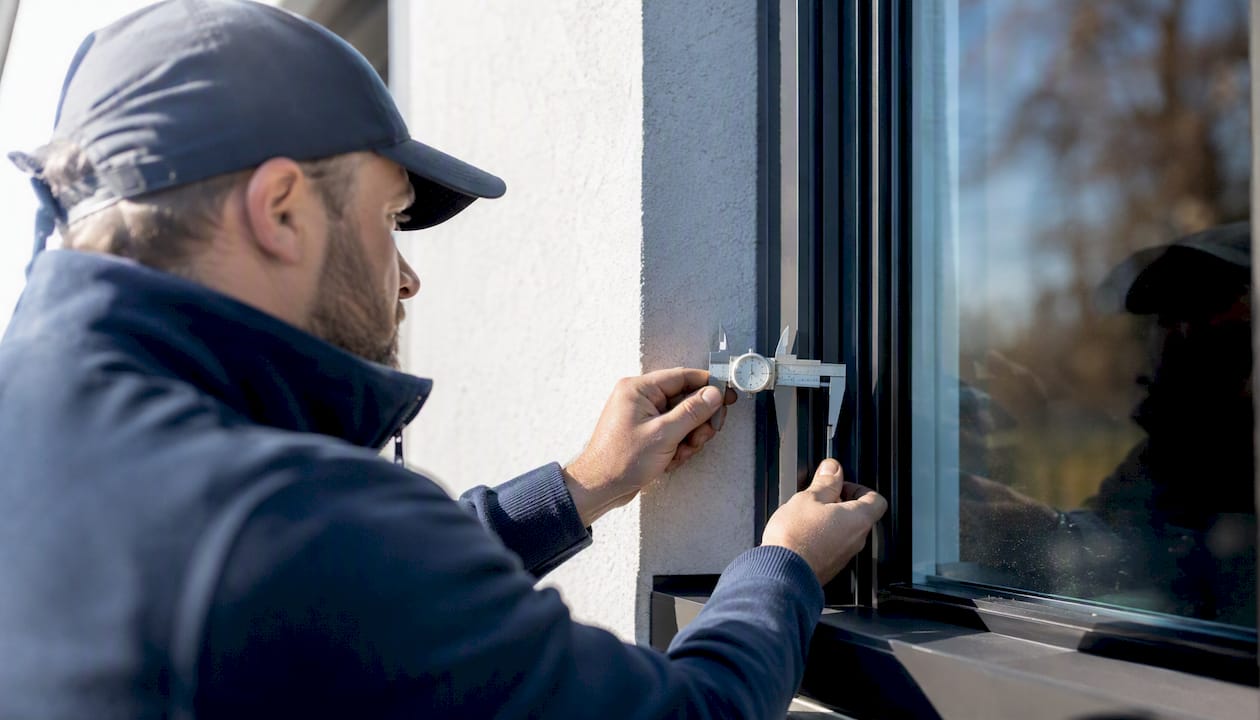
The methodology a qualified installer uses is what separates a safe outcome from a costly mistake. Here is the workflow Tintadvantage follows for double-pane projects:
Pre-inspection and thermal analysis steps:
- Low-E surface identification: Using a low-E detector or the lighter/match test on each pane surface to determine which surface carries the coating and whether interior film is appropriate
- Glass area measurement: Recording exact dimensions to compare against manufacturer maximum pane area limits (per Avery Dennison and 3M FTG charts)
- Tempering verification: Checking corner etchings and polarized lens inspection for stress patterns that confirm tempered vs. annealed glass
- Orientation and solar load recording: Noting compass direction, roof overhang depth, and any partial shading that creates uneven heating
- Seal integrity check: Visual inspection and, where needed, moisture detection around the spacer perimeter
- Film absorptance modeling: Matching the proposed film’s TSA to the window’s solar exposure and pane construction before recommending a product
What a homeowner should receive in writing after a professional assessment: the film’s product data sheet with absorptance and SHGC values, the installer’s compatibility determination for your specific IGU, and the workmanship warranty terms. If any of these three documents are missing, the job is not complete.
Tintadvantage’s certified installers carry manufacturer FTG compatibility charts for the films they install, including products from Avery Dennison and 3M, and will not proceed on a window that fails the pre-inspection criteria without first discussing repair options with the homeowner.
What most homeowners get wrong about double-pane film
The most common misconception is that double-pane windows are simply harder to tint than single-pane — when the real issue is that they require a different decision process, not a harder one. Single-pane glass is more forgiving because there’s no sealed air gap to protect and no second pane to stress. Double-pane glass demands that you match the film’s absorptance to the pane’s construction. Get that right, and the installation is straightforward.
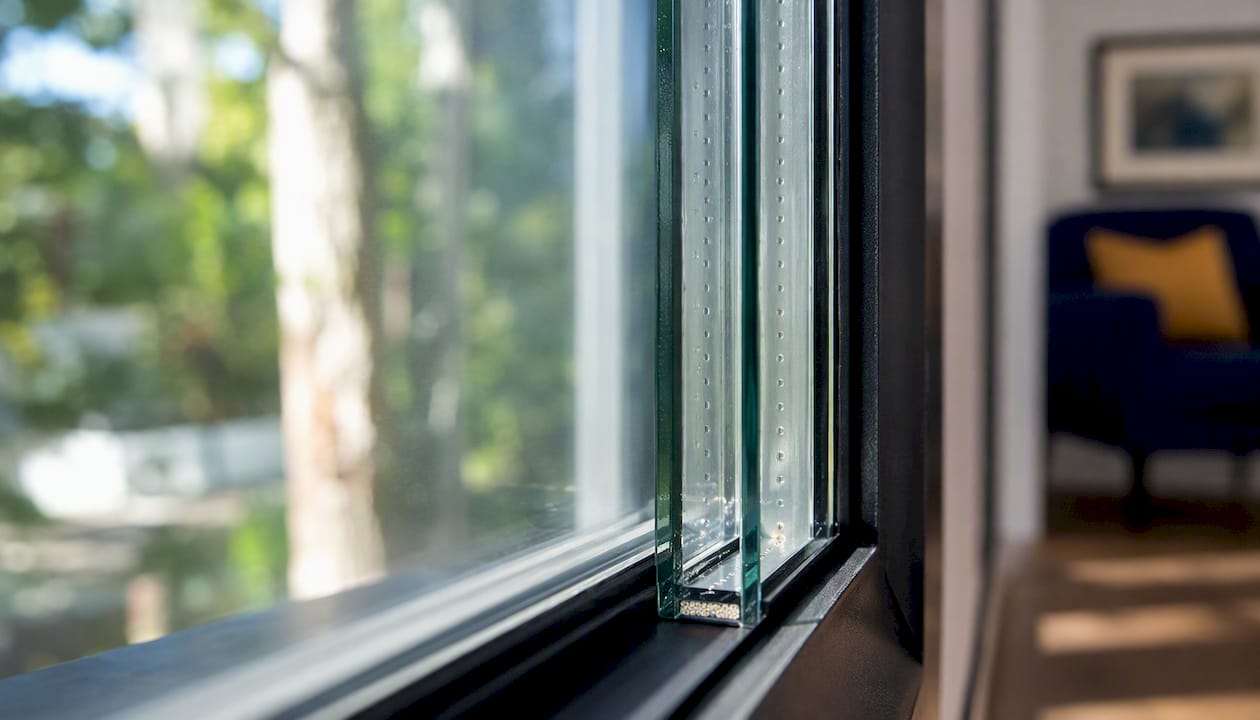
The second thing people underestimate is the low-E surface question. Many homeowners don’t know which surface of their IGU carries the coating, and some don’t know they have low-E glass at all. Applying a high-absorption film on the same surface as a soft low-E coating concentrates heat exactly where the glass is most vulnerable. An experienced installer checks this before anything else — it takes two minutes and changes the entire film recommendation.
One practical tip that rarely appears in consumer guides: if you have south- or west-facing windows with annealed glass and no tempering, ask your installer specifically about exterior film. Exterior application keeps absorbed energy outside the glass assembly entirely, which eliminates the thermal stress concern for the inner pane. The film wears faster outdoors, but for high-exposure annealed IGUs, it’s often the safer long-term choice.
Pro Tip: Before any installation, ask your installer to document the low-E surface location and the film’s absorptance number on the work order. That single line of documentation protects you if a warranty dispute arises later.
Tintadvantage handles the compatibility check for you
Figuring out which film is safe for your specific double-pane windows takes more than a product label. Tintadvantage’s certified installers in Omaha conduct a full pre-installation inspection: low-E surface identification, seal integrity check, glass area measurement against manufacturer limits, and thermal-stress analysis before a single film is cut. Every project comes with a written workmanship warranty and the film’s product data sheet, including absorptance and SHGC values.

To get a fast, accurate estimate, have your window dimensions, orientation, and primary goal ready (heat control, privacy, UV protection, or security). Use the pre-application checklist in this article and bring those details to your first call. Tintadvantage and a certified installer will assess your windows, recommend a compatible film, and give you a written quote with no obligation.
Sources
These resources let you verify technical points and manufacturer constraints directly:
- Can you install window film on double-pane windows? - Concord Window Film
- Window Glazing | Efficient Windows Collaborative
- Can You Tint Double Glazed Windows | Trade Heroes
When in doubt about a specific product, request the film’s full data sheet from the manufacturer and ask your window manufacturer whether applying film affects your IGU warranty. Both steps take minutes and can prevent a costly mistake.